Primary states
Himachal Pradesh, Uttarakhand, Jammu & Kashmir, Sikkim
Texture
Variable — humus-rich loam at the surface, gravelly to stony below
pH
4.5–6.5 — strongly acidic on high-rainfall slopes, slightly acidic in mid-elevation orchards
🗺️ Where you'll find it
Geography
Covers about 8.6% of India's land. Found mainly across Himachal Pradesh, Uttarakhand, Jammu & Kashmir, Sikkim, Arunachal Pradesh, Meghalaya, Mizoram, Nagaland, Western Ghats districts of Karnataka, Kerala, Tamil Nadu.
Himalayan mid-elevation (1000–2500 m)
Apple is the lead crop — {{nt:Royal Delicious}}, {{nt:Spur Red}}, and {{nt:Golden Delicious}} are the long-standing varieties; high-density spur-types are now replanting orchards under HP Horticulture Mission. Walnut, stone fruit, and off-season vegetables on lower terraces. Transhumance with sheep on the higher pastures.
Western Ghats forest belt
{{nt:Coorg arabica}} coffee under shade trees on the Karnataka slopes; robusta lower down. Small cardamom on the Kerala high range. Pepper climbing on the same support trees as coffee. Tea on the Nilgiris and Munnar uplands. High rainfall; humus thick at the surface, often acidic below.
North-East hills
Jhum (shifting) cultivation historically dominant; now transitioning to terraced and settled cultivation under MOVCD-NER. Large cardamom on the Sikkim/Arunachal slopes; {{nt:Maran}} and {{nt:Rio-de-Janeiro}} ginger varieties are the most common cultivars across the NE; turmeric, oranges (Khasi mandarin), pineapple, and short-duration {{nt:VL Maize}} on terraced fields.
👁️ Look & Feel
What you see, what you feel
Walk into a hill field after the first monsoon and notice the smell — leaf-litter, damp humus, a richness underfoot. The soil here changes with every step downhill: humus-thick at the top, gravelly in the middle, often a different colour again at the foot. This is the soil that holds the forest in place — and asks the farmer to do the same.
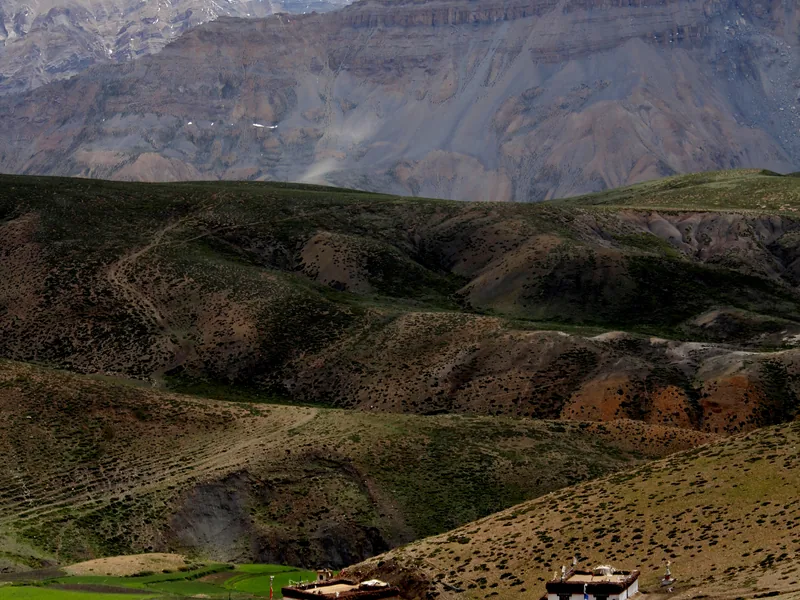
Stepped terraces at Komic village, Spiti — every flat patch built and held by hand.
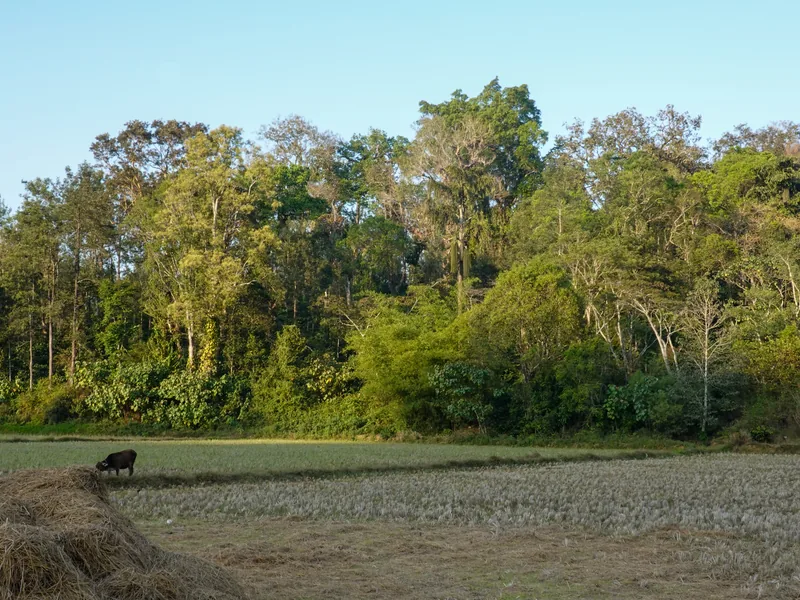
Hill agriculture in Coorg — paddy fields below the forest treeline.
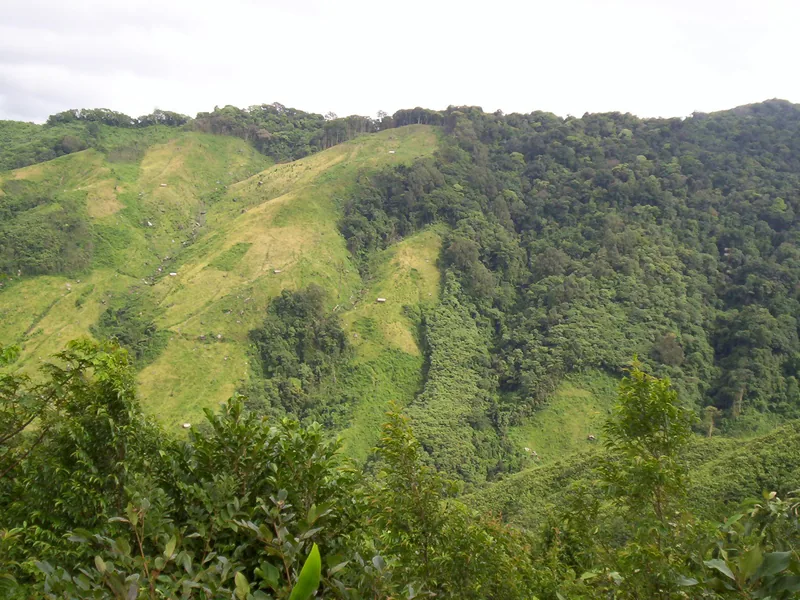
Jhum (shifting) cultivation — Nokrek Biosphere Reserve, Meghalaya.
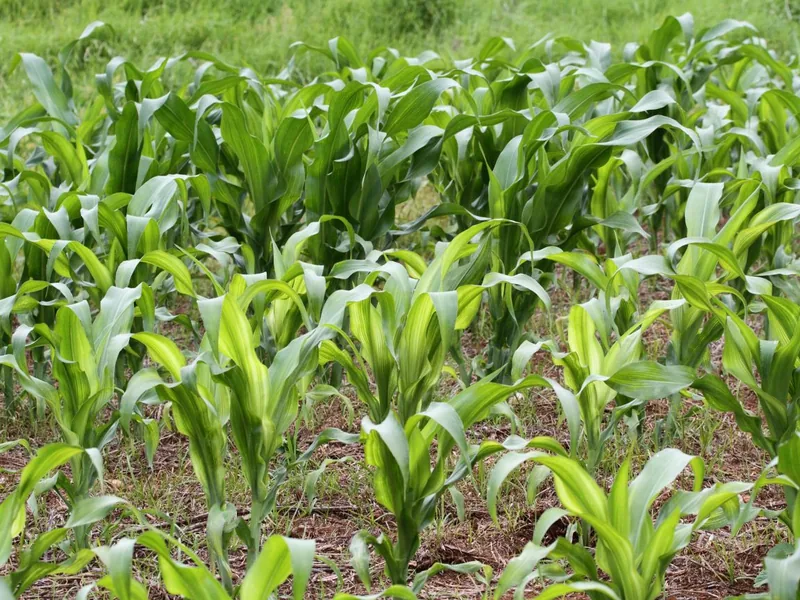
In hand: dark, fluffy, leaves a smudge of humus on the palm.
Mohan-uploaded (placeholder)
⚖️ Physical character
How it handles
Texture
Variable — humus-rich loam at the surface, gravelly to stony below
Structure
Crumbly at the top, single-grained where the gravel begins; the difference is sharp
Depth
Shallow on steep slopes (often <30 cm), deeper in valleys and on terraced flats
Drainage
Excellent on slopes — sometimes too excellent. Valley bottoms can stay damp through the cool months
Water-holding (mm/m)
100–180 mm at the humus-rich top; much lower in the gravelly mid-profile
Working the soil: Easy to work where it's deep enough. Steep slopes lose topsoil to every monsoon — the work is keeping the soil there, not breaking it up.
🧪 Chemical character
The science behind it
pH range
4.5–6.5 — strongly acidic on high-rainfall slopes, slightly acidic in mid-elevation orchards
EC (dS/m)
Below 0.5 dS/m almost everywhere; salinity is not a hill problem
CEC (meq/100g)
10–25 meq per 100 g at the humus-rich top; lower in the mid-profile
Free CaCO₃
Generally absent — the soil is acidic, not calcareous
Scientific name: Soil scientists use a mix of names depending on slope and elevation — Inceptisols on younger mid-elevation profiles, Mollisols where humus runs deep, Spodosols on the highest acid-leached patches.
🌿 Nutrient status
What's plenty, what's missing
Typical nutrient picture for this soil. For your specific field, always get the ICAR Soil Health Card.
1.5–4% at the surface
The hill's gift. Forest litter and undergrowth keep building organic matter every year — protect it by not letting the topsoil wash away.
Plenty in organic form, but slow-released. Apple, walnut, and vegetable crops often need a small fertiliser top-up at flowering.
P is locked up by the soil's acidity. A small dose of lime (where available) frees up P that's already in the ground; new P is best dropped beside the seed.
Variable — orchards on mid-elevation soils often run short, especially under heavy fruiting. Apple, walnut, and large cardamom respond.
Generally adequate. Yellowing of new leaves on rapeseed-mustard intercrops is the rare warning.
Apple shows narrow, bunched 'rosette' leaves when Zn is short. Worth a soil test on long-fruiting orchards.
Generally plenty; iron rarely limits hill crops.
Apple shows internal browning; cauliflower shows brown patches in the curd. A pinch of borax once a year solves it.
☔ Climate & water
What this soil expects
Rainfall this soil expects
Hill rainfall ranges from 600 to 800 millimetres in Himalayan rain-shadow valleys (parts of Kullu and Kashmir) up to 3,000 millimetres on Western Ghats slopes and 5,000 millimetres or more on Khasi Hills cherrapunji-influenced patches. Rainfall is rarely the limiting factor — the issue is what the slope keeps of what the cloud delivers.
Irrigation — what crops need on this soil
Most hill agriculture is rainfed — apple, walnut, large cardamom, tea, coffee, ginger all live on natural precipitation. Spring-water and small farm-pond systems extend the season. Drip is uncommon on steep slopes but starting to appear in high-density apple orchards. Where irrigation matters most is in the Himalayan rain-shadow valleys (Spiti, Lahaul, parts of Ladakh) where farming is fully irrigated.
Climate zones this soil sits in
Cool sub-humid to humid (Himalayan mid-elevation: HP, Uttarakhand, J&K), warm humid to per-humid (Western Ghats forest belt), warm humid (NE hills). Long winters and cool summers across most hill belts allow crops that don't fit in the plains: apple, walnut, large cardamom, temperate stone fruit, cool-weather vegetables. The climate is the soil's protection — slow decomposition lets humus build up over decades.
🌾 Crops
What grows well here
Mid-elevation Western Ghats slopes give the cool nights and well-drained acidic soil that arabica and robusta both want.
Tip: Plant under shade trees (silver oak, dadap). Mulch heavily with leaf litter. Lime once every 3–5 years to keep the acidity in check.
Loves the high rainfall, humus-rich soil, and partial shade of high-elevation forest fringes.
Tip: Plant in pits under shade trees; never let the topsoil go bare; small cardamom in the south, large cardamom in the north-east.
Climbs the support trees in coffee gardens — the same hill soil and rainfall that suit coffee suit pepper.
Tip: Train on silver oak or jackfruit support trees. Mulch the base; avoid waterlogging.
Cold winters and deep humus-rich soil at 1500–2500 m are exactly what apple needs.
Tip: Plant on terraces; train trees from young; pollinator varieties every few rows. Watch for boron and zinc shortages — apple shows internal browning (boron) and rosette-leaf bunching (zinc).
Loves the well-drained, acidic, organic-rich topsoil of hill fields.
Tip: Plant rhizomes in raised beds on terraces; mulch heavily; lift before the heaviest rains end.
Same hill conditions as ginger — and a longer crop with stronger market.
Tip: Plant on raised beds 30 cm high; harvest at 9–10 months; cure rhizomes by boiling and drying.
Quick kharif crop on terraced fields; tolerates the cool short summer of mid-elevation hills.
Tip: Sow with the first reliable rain; intercrop with rajma (kidney bean) — the climber uses the maize as a trellis.
Tolerates acidity better than most fruits; the spiny leaves shed water from the heavy rain.
Tip: Plant suckers 60 cm apart on terraces. Drainage matters more than irrigation here.
🍂 Deficiency signs
What the plant tells you
If you see these in your field, get your soil tested before adding inputs.
Phosphorus deficiencyఫాస్ఫరస్ లోపం
Old leaves dull purple-green; plants stay short. Severe on acidic high-rainfall soils where lime is absent.
Phosphorus-deficient maize on acidic hill terrace — older leaves with purple tinge.
ICAR-VPKAS Almora
Illustrative — actual symptoms vary. Stunted ginger with dull leaves on acidic soil.
ICAR-IISR (illustrative)
What to do: Lime is the lever — even 200 kg per acre raises the soil's comfort and frees up P that's already there. New fertiliser P drops in a line near the seed.
Boron deficiencyబోరాన్ లోపం
Apple shows internal browning of the fruit; cauliflower shows brown patches in the curd; cabbage hearts crack.
Boron-deficient apple: internal browning and corkiness — Kullu valley.
ICAR-CITH Srinagar
Illustrative — actual symptoms vary. Boron-deficient cauliflower: brown patches in the curd.
ICAR-IIVR (illustrative)
What to do: A pinch of borax around each tree at flowering, or 1 g per litre as a foliar spray on vegetables. Don't overdo — too much boron also damages the crop.
Zinc deficiencyజింక్ లోపం
Apple shows 'rosette' — narrow, bunched leaves on short shoots; maize shows white streaks between leaf veins.
Zinc-deficient apple: rosette leaves bunched at shoot tips.
ICAR-CITH Srinagar
Zinc-deficient maize: white streaks between the leaf veins on young plants. Illustrative — actual symptoms vary.
What to do: Zinc sulphate at sowing for annual crops; for orchards, foliar spray of zinc sulphate twice in spring before flowering.
🛠️ Management
Practices that work for this soil
📐Terracing and contour bunds
మెట్లు మరియు కంటౌర్ గట్లు On any slope steeper than 5°, build either proper terraces or small earth bunds along the contour every 8–15 m down the slope.
Why it helps: Without terraces or bunds, every monsoon takes away topsoil it took the hill centuries to make. With them, the water sinks in instead of running off, and the soil stays where the crop is.
🍂Mulch with leaf litter
ఆకుల కవచంతో మల్చ్ Spread leaves, pine needles, or shade-tree loppings 5–10 cm thick on the soil surface around trees and between vegetable rows.
Why it helps: Leaf-litter mulch protects the topsoil from heavy rain, keeps the soil cool, and slowly adds organic matter back. On hill soils, mulch is almost as important as fertiliser.
⚪Lime where it's available
సున్నము చేర్చడం 200–500 kg of agricultural lime per acre, mixed into the topsoil before sowing or around the tree drip-line, once every 3–5 years.
Why it helps: In hill soils, the cold and the acid together slow down how nutrients become available. Lime helps the soil release what's already there — your farmyard manure works harder when the pH is right.
🔄Replace jhum with terraced settled cultivation
ఝుమ్ స్థానంలో మెట్ల వ్యవసాయం Where soils, slopes, and community rules allow it, convert long-cycle jhum to terraced fields with multi-storey cropping (cardamom + ginger + maize, or oranges + ginger).
Why it helps: Jhum cycles have shortened from 15–20 years to 3–5 years in many NE areas — too short for the soil to recover. Settled terraces with year-round ground cover give similar or higher yields without the soil loss.
🌴Multi-storey homestead garden
బహుళ-అంతస్తుల ఇంటి తోట Use the same field at multiple heights — fruit trees on top, climbers on the trees, vegetables on the ground.
Why it helps: Hill farmers' fields are small. Multi-storey cropping gives 3–4 harvests from one piece of ground, spreads the income across the year, and protects the soil with year-round canopy.
🏛️ Government schemes
Support you may be eligible for
Note: Officially listed under 'Inceptisols' / 'Mollisols' / 'Brown Forest' / 'Mountain Meadow' on government portals depending on elevation and humus depth.
Mission for Integrated Development of Horticulture
Department of Agriculture & Farmers Welfare
Subsidies for apple, walnut, off-season vegetables, plantation crops; cold-chain and post-harvest support.
Visit portal →Mission Organic Value Chain Development for North Eastern Region
Department of Agriculture & Farmers Welfare
Cluster-based organic farming — large cardamom, ginger, turmeric, citrus — with certification and market linkages.
Visit portal →Spices Board — Small & Large Cardamom Development
Spices Board of India
Replanting subsidy for small cardamom (Kerala) and large cardamom (Sikkim, Arunachal); curing-house infrastructure.
Visit portal →Himachal Pradesh Horticulture Mission (Apple)
Government of Himachal Pradesh / Department of Horticulture
Replanting old apple orchards with spur-type and high-density varieties; anti-hail nets; cold-storage support.
Visit portal →💭 Common beliefs
What we hear — and what's true
On steep slopes, you can't really stop the soil from washing — every monsoon takes some, that's just how hills are.
Slope erosion is not destiny — it is what happens when the soil is bare. Terraces hold the soil as long as the bunds are maintained; contour bunds at 8 to 15 metre spacing slow runoff to a walking pace; year-round ground cover (legume cover crops, leaf-litter mulch, multi-storey canopy) shields the surface from raindrop impact. Together they cut hill-soil erosion to a small fraction of the bare-slope rate.
Why it matters: Hill topsoil takes centuries to make and one severe monsoon to lose. The terraces and bunds you build now stay productive for the next generation. ICAR-IISWC (the Indian Institute of Soil and Water Conservation) provides design and subsidy guidance through state agriculture departments; the Mission for Integrated Development of Horticulture covers a share of the cost on horticultural lands.
Jhum is our traditional way — settled terrace farming is what outsiders push on us.
Traditional jhum worked on a 15 to 20 year cycle that gave the soil time to recover. With population pressure, jhum cycles in many North-East areas have compressed to 3 to 5 years — far too short for the forest to regrow and the soil to rebuild. Settled multi-storey cropping (cardamom + ginger + maize, or oranges + ginger) keeps the same field productive year after year without the soil loss of compressed-cycle jhum.
Why it matters: Compressed jhum gives shrinking yields and bigger erosion losses. The Mission Organic Value Chain Development for North Eastern Region was designed precisely to support the transition with cluster-based organic certification, market linkages, and replacement income through cardamom, ginger, turmeric, and citrus. Settled does not mean abandoning tradition; it means giving the soil the rest jhum was originally designed to provide.
My apple orchard is 50 years old — it's done, I should pull it out and replant.
Many ageing apple orchards in Himachal and Kashmir are not 'old' — they are nutrient-starved and undermined by years of skipped pruning. A boron and zinc spray, plus structured pruning to bring sunlight back to the canopy, plus regular farmyard manure to the drip-line, can restore production for another decade or more. Replanting is the right call when scab disease, root collar rot, or actual age has set in — not just because yields have dropped.
Why it matters: Replanting an apple orchard means three to five years without income from that block — the trees take that long to bear. The Himachal Pradesh Horticulture Mission subsidises replanting with high-density spur-type and dwarf-rootstock varieties, but only after a check-up confirms the existing trees can't be rejuvenated. Ask the local Krishi Vigyan Kendra or the State Department of Horticulture for a tree-by-tree assessment before pulling anything out.
📚 Sources
Where this comes from
Sourced only from ICAR, NBSS&LUP, SAU, KVK, and ICRISAT. Wayback Machine snapshot links preserve citations against URL rot.
bookMishra, B.B. (Ed.). (2020). The Soils of India. Springer Nature Switzerland.
Canonical contemporary Indian soil science reference.
extension-pubSoil and water conservation on hill slopes
link extension-pubHill agriculture — package of practices for the Himalayas
link extension-pubApple, walnut, stone-fruit production in temperate zones
link government-portalCoffee on Western Ghats hill soils
link extension-pubHill farming systems for the North-East
link government-portalSoil Health Card scheme — find your nearest test centre
link
A note — This page is an educational guide built from public extension materials. It is not a prescription. Your soil is unique. For specific fertilizer or amendment decisions, get your soil tested and consult your nearest KVK or local agriculture extension officer.