Primary states
Uttar Pradesh, Haryana, Punjab, Gujarat (coastal & Rann fringe)
Texture
Variable — sandy loam in coastal patches, heavier silty-clay in the Indo-Gangetic belt
pH
Sodic (alkaline): pH 8.5–10. Saline: pH 7–8 with high salts.
🗺️ Where you'll find it
Geography
Covers about 2.6% of India's land. Found mainly across Uttar Pradesh, Haryana, Punjab, Gujarat (coastal & Rann fringe), West Bengal (Sundarbans), Kerala (backwaters), Odisha (delta tips), Rajasthan (canal commands).
Indo-Gangetic alkali (Usar / Reh) belt
Sodic soil — high sodium, low calcium, dispersing clay forms a hard surface crust. Reclamation with gypsum and dhaincha is decades-old practice and well-documented.
Coastal saline (Sundarbans, Kerala backwaters, Gujarat coast)
Saline — total salts high, the watertable brackish, crops face salt stress in the dry months when fresh water doesn't reach. Two named cropping systems define this region: {{nt:Pokkali}} rice-with-prawn rotation in Ernakulam–Alappuzha–Thrissur (kharif rice on lightly desalinated fields, prawn culture on the same field in dry months); and {{nt:Kaipad}} paddy in Kannur–Kasaragod, where tide-influenced fields are sown with traditional salt-tolerant landraces.
Rann of Kutch margin
Mix of saline and alkaline patches at the salt-flat's edge. Cotton, castor, salt-tolerant grasses; reclamation slow because of evaporation and salt re-deposition.
👁️ Look & Feel
What you see, what you feel
Look at a usar field in summer and you see a white bloom on the surface — not chalk, not lime, but salt that the sun has pulled up from below. In some fields the white is sodium (alkaline, called {{nt:usar}} or {{nt:reh}}); in others it's a mix of salts (saline, called {{nt:kallar}}). Both kill crops if left alone. Both can be brought back, with patience. Across India, this 'left alone' tax adds up to roughly ₹230 billion a year in lost crop production — about half from sodicity, half from salinity (ICAR-CSSRI 2014–15).
White salt crust on a summer usar field — UP, May.
ICAR-CSSRI Karnal
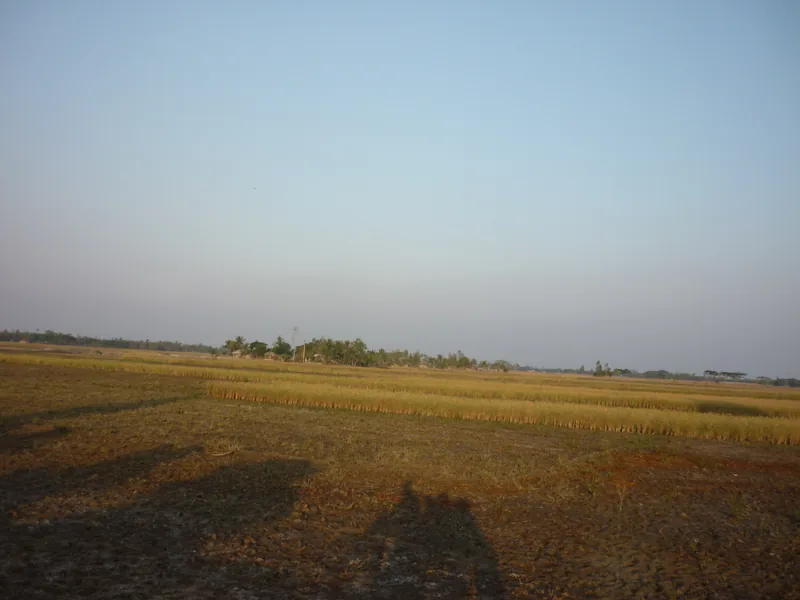
Coastal Bengal paddy fields, Sundarbans — bunded against saline tides.
Profile showing the hard sub-surface kankar layer that traps water and pushes salts up.
ICAR-NBSS&LUP
In hand: the surface crumbles to powder; below the crust, the soil is dense and grey.
Mohan-uploaded (placeholder)
⚖️ Physical character
How it handles
Texture
Variable — sandy loam in coastal patches, heavier silty-clay in the Indo-Gangetic belt
Structure
Sodic patches develop a hard surface crust and a dense sub-surface layer; saline patches stay loose but salt-coated
Depth
Variable; a hard kankar pan at 30–60 cm is common in the IGP usar belt and blocks drainage
Drainage
Poor — that's the heart of the problem. Trapped water carries salts up to the surface every dry season
Water-holding (mm/m)
100–180 mm in usable layers; the sub-surface pan blocks roots before they reach more
Working the soil: The hard surface crust on usar means the seedling can't push through. Soft tillage and a fine seedbed matter more here than in any other soil. On coastal saline, fields must be bunded — fresh water in, saltwater out — every monsoon.
🧪 Chemical character
The science behind it
pH range
Sodic (alkaline): pH 8.5–10. Saline: pH 7–8 with high salts.
EC (dS/m)
Sodic: 1–4 dS/m typically. Saline: 4–16 dS/m or more — this is where most crops fail
CEC (meq/100g)
10–25 meq per 100 g, but largely occupied by sodium in sodic patches — useless for most plants
Free CaCO₃
Common in the IGP usar belt; absent in coastal saline
Scientific name: Soil scientists separate the alkaline (sodic) ones — high sodium, dispersing clay, called {{nt:solonetz}} or {{nt:usar}} — from the saline ones — high total salts, called {{nt:solonchak}} or {{nt:kallar}}. The reclamation paths are different.
🌿 Nutrient status
What's plenty, what's missing
Typical nutrient picture for this soil. For your specific field, always get the ICAR Soil Health Card.
0.1–0.4%
Salt-stressed soils don't hold organic matter well. Green manure (dhaincha, sunhemp) is both food for the soil and the start of reclamation.
Salt damage looks like N deficiency at first — pale stunted plants. A soil test tells the difference; without that, you waste urea on a salt problem.
Tied up by the soil's alkalinity. Drop new P in a line beside the seed; once the soil is reclaimed, P availability improves.
Generally adequate. The K is there; getting it past the sodium and into the plant is the harder problem.
Yellowing of new leaves on mustard, dhaincha, or salt-tolerant rice — a small dose of gypsum doubles as an S source and as a sodicity treatment.
Severe in reclaimed sodic patches. Zinc sulphate at sowing on rice is almost always worth the small cost.
Locked up by alkalinity in sodic patches. Foliar spray of iron sulphate works fastest where soil application doesn't.
Variable. In some saline patches, B is too high (toxic) — check before adding any boron-containing fertiliser.
☔ Climate & water
What this soil expects
Rainfall this soil expects
Sodic patches in the Indo-Gangetic plain sit in 500 to 800 millimetre rainfall zones (AERs 4 and 9). Saline patches occur where rainfall is below 500 millimetres (arid AERs) — except on coasts, where the rainfall is high but seawater intrusion is the salt source. Rainfall is rarely the issue; what matters is whether the rain can flush salts past the root zone or whether evaporation pulls them back up.
Irrigation — what crops need on this soil
Reclamation depends on irrigation: gypsum needs heavy water to leach the displaced sodium, and salt-tolerant rice needs flooded-then-drained fields. On coastal saline, the irrigation challenge is reversed — the question is keeping saltwater OUT, not getting fresh water in. Bunds, embankments, and tide-gates are the irrigation infrastructure on the Sundarbans, Kuttanad, and Konkan coasts.
Climate zones this soil sits in
Hot semi-arid (Indo-Gangetic usar belt: UP, Haryana, Punjab; Rann fringe: Kutch). Hot sub-humid coastal (Sundarbans, parts of Andhra delta). Hot per-humid coastal (Kuttanad backwaters, Konkan). The shared feature is high evaporation: hot summers concentrate salt at the surface every dry season, whether the soil's history is inland or coastal.
🌾 Crops
What grows well here
Salt-tolerant rice varieties (CSR-30, CSR-43, Sumati, Canning-7) make a crop where almost nothing else does.
Tip: Use the salt-tolerant varieties bred at ICAR-CSSRI; transplant only after the field is well-flushed by monsoon water.
Salt-tolerant varieties (KRL-19, KRL-210) succeed on partially reclaimed sodic patches.
Tip: Apply gypsum two seasons before wheat goes in; sow on time; light frequent irrigation.
Tolerant of moderate salinity; the rabi cool-season fits between rice/dhaincha and the next kharif.
Tip: A small dose of sulphur (gypsum or single super-phosphate) almost always pays back here.
Among the more salt-tolerant cereals — survives where wheat struggles.
Tip: Sow early; use salt-tolerant varieties from ICAR-IIWBR if available locally.
Tolerates moderate salinity once established; deep root reaches sub-soil moisture.
Tip: Drip irrigation on raised beds keeps salt out of the root zone better than flooding.
Salt-tolerant oilseed; deep root reaches sub-soil water; tolerates the heat of Kutch.
Tip: Plant on light ridges; keep weeding for the first two months.
Tolerates brackish watertable better than almost any other tree crop.
Tip: Plant in pits filled with topsoil, sand, and farmyard manure; mulch husk back annually; keep the rootzone above the saline watertable with mounding.
🍂 Deficiency signs
What the plant tells you
If you see these in your field, get your soil tested before adding inputs.
Salt-stress symptoms (mistaken for N deficiency)ఉప్పు ఒత్తిడి లక్షణాలు
Stunted, pale plants with rolled leaves and burnt margins. Looks like nitrogen shortage, but adding urea makes it worse — the salt is the problem, not the N.
Salt-stressed rice in a partially reclaimed usar field — leaf-tip burn and stunting.
ICAR-CSSRI Karnal
Illustrative — actual symptoms vary. Salt-stressed wheat: pale stunted plants with rolled leaves.
ICAR-CSSRI (illustrative)
What to do: Don't add more urea. Get a soil test to confirm whether it's salt or N. The path back is gypsum (for sodic) or drainage and flushing (for saline) — not fertiliser.
Zinc deficiency on reclaimed sodic patchesక్షార నేలలో జింక్ లోపం
White-bronze patches on rice between the veins; stunted growth at the tillering stage. Almost universal on freshly-reclaimed sodic soils.
Zinc-deficient rice on a reclaimed sodic patch — Karnal experiment field.
ICAR-CSSRI Karnal
What to do: 25 kg of zinc-sulphate per acre at sowing covers two to three seasons. On reclaimed sodic patches, this is almost as essential as the gypsum itself.
Iron chlorosis from alkalinityక్షారత వల్ల ఇనుము లోపం
Yellow-green streaks between the veins on young leaves; older leaves stay green. The high pH locks up iron.
Iron-chlorotic rice nursery on alkaline usar soil.
ICAR-CSSRI Karnal
Illustrative — actual symptoms vary. Iron chlorosis in groundnut on calcareous patches.
ICAR-DGR (illustrative)
What to do: Foliar spray of iron sulphate — sprayed on leaves twice, a week apart — works faster than soil application on alkaline fields.
🛠️ Management
Practices that work for this soil
⚪Gypsum for sodic reclamation
క్షార నేల కోసం జిప్సం Apply 5–15 tonnes per hectare of agricultural gypsum, mixed into the topsoil, and follow with heavy irrigation to leach the displaced sodium.
Why it helps: Calcium in gypsum replaces the sodium on the clay surface; the sodium leaves with the irrigation water. This is the single most important step in reclaiming usar — and it's been done at scale by ICAR-CSSRI for 50 years.
🌱Dhaincha green manure cycle
దైంచతో ఆకుపచ్చ ఎరువు After gypsum, sow dhaincha (Sesbania) or sunhemp (Crotalaria); at flowering, plough it back in.
Why it helps: Salt-tolerant green manure is the second step of reclamation. It feeds organic matter back into a soil that has almost none, fixes nitrogen, and softens the surface crust so the next crop's seedling can push through.
🏞️Drainage on coastal saline fields
తీర ఉప్పు నేలల్లో నీరు తీసివేత Open drains every 25–50 m, sloped at 1 in 1000, leading away from the field. Maintain bunds against saltwater intrusion every monsoon.
Why it helps: On coastal saline soils, salt rises with the watertable in the dry months. Drainage lets fresh monsoon water flush the topsoil and keeps the watertable below the root zone. Without drainage, no salt-tolerant variety can hold for long.
🌾Salt-tolerant varieties
ఉప్పును తట్టుకునే రకాలు Use varieties bred for salt tolerance — CSR-series rice, KRL-series wheat, salt-tolerant mustard. Plant from the second-generation seed of the same variety, not bazaar mix.
Why it helps: A salt-tolerant variety is the single most cost-effective input on a salt-affected field. ICAR-CSSRI has released over 60 such varieties — the right one for your district is usually free at your local Krishi Vigyan Kendra.
🌾Mulch and surface cover always
నేల మీద ఎల్లప్పుడూ కవచం Keep the soil surface covered — with a crop, with crop residue, with green manure — for as much of the year as possible.
Why it helps: Bare soil + sun = salts pulled up to the surface by evaporation. A covered soil keeps the salts down where the rain can flush them out. This single discipline slows the salt cycle more than any fertiliser ever does.
🏛️ Government schemes
Support you may be eligible for
Note: Officially listed under 'Solonchaks' (saline) / 'Solonetz' (sodic) on government portals.
Uttar Pradesh Sodic Lands Reclamation Project
UP Bhumi Sudhar Nigam (formerly UPLDC)
Gypsum-based reclamation of sodic land in UP; subsidised gypsum + dhaincha seed; farmer-collective contracts. Decades-old, World Bank-supported.
Visit portal →National Mission for Sustainable Agriculture — Reclamation of Problem Soils
Department of Agriculture & Farmers Welfare
Sub-scheme of National Mission for Sustainable Agriculture covering sodic, saline, and acidic soil reclamation across India.
Visit portal →All India Coordinated Research Project on Salt-Affected Soils
ICAR — coordinated by ICAR-CSSRI Karnal
Coordinated research network across 14 cooperating centres; releases salt-tolerant varieties and area-specific reclamation packages.
Visit portal →Coastal Embankment Improvement & Disaster Management Project
Government of West Bengal + World Bank funding
Strengthens Sundarbans embankments to keep saltwater out of paddy fields; vital for the rabi cropping window.
Visit portal →💭 Common beliefs
What we hear — and what's true
Salt land is dead land — there's no point trying to farm it; sell it and move on.
ICAR-CSSRI in Karnal has reclaimed sodic land at scale since the 1960s. Gypsum to displace sodium, dhaincha green manure to add organic matter back, and salt-tolerant rice and wheat to crop the reclaimed field — this three-step package has restored hundreds of thousands of hectares in Uttar Pradesh, Haryana, and Punjab. The Uttar Pradesh Sodic Lands Reclamation Project is now in its third phase precisely because the previous phases worked.
Why it matters: Salt-affected land in India loses roughly ₹2,30,000 million in crop production every year — about half from sodicity, half from salinity (ICAR-CSSRI 2014–15). That is the cost of leaving it 'as it is'. Reclamation costs vary, but the soil comes back to crops within a few seasons of disciplined gypsum + dhaincha + salt-tolerant variety treatment. Government scheme support is available through the Uttar Pradesh Sodic Lands Reclamation Project and the National Mission for Sustainable Agriculture's reclamation sub-scheme.
Salt-tolerant rice or wheat is weak rice or wheat — the regular variety gives more.
Salt-tolerant varieties (CSR-30, CSR-43, Sumati for rice; KRL-19, KRL-210 for wheat) are bred specifically to keep yielding where regular varieties fail. On a salt-affected field, the comparison isn't tolerant-versus-regular yield side by side — the regular variety simply doesn't make a crop. Tolerant varieties hold 60 to 80% of their non-salt potential on partially reclaimed fields where the regular variety would give close to zero.
Why it matters: Choosing the right variety is the cheapest single decision on a salt-affected field. ICAR-CSSRI has released over 60 salt-tolerant varieties, and most are available free or at minimal cost from the local Krishi Vigyan Kendra. Buying bazaar-mix seed labelled as a tolerant variety is the trap — it is usually second-generation seed that has lost the tolerance trait.
More irrigation will wash the salt out — just flood the field heavily.
Without drainage, more irrigation makes salinity worse, not better. The water evaporates, leaving the salt behind on the surface. On coastal fields, every irrigation pulls the brackish watertable up. The reclamation formula is drainage first (open drains every 25 to 50 metres on coastal saline; gypsum + leaching irrigation on inland sodic), then careful flushing in monsoon when the salt has somewhere to go.
Why it matters: On the Sundarbans, Kuttanad, and other coastal saline belts, embankment maintenance and tide-gates are the irrigation infrastructure that matter most. The Coastal Embankment Improvement Project in West Bengal, supported by World Bank funding, exists specifically to keep saltwater out of the rabi paddy window. Adding more irrigation without drainage on these fields is paying to bring the salt up faster.
📚 Sources
Where this comes from
Sourced only from ICAR, NBSS&LUP, SAU, KVK, and ICRISAT. Wayback Machine snapshot links preserve citations against URL rot.
bookMishra, B.B. (Ed.). (2020). The Soils of India. Springer Nature Switzerland.
Canonical contemporary Indian soil science reference; co-anchor with CSSRI for the macro / economic figures in Ch 11.
extension-pubReclamation of salt-affected soils — handbook
link extension-pubSalt-tolerant rice varieties — CSR series
link extension-pubSalt-tolerant wheat varieties (KRL series)
link government-portalSoil Health Card scheme — find your nearest test centre
link
A note — This page is an educational guide built from public extension materials. It is not a prescription. Your soil is unique. For specific fertilizer or amendment decisions, get your soil tested and consult your nearest KVK or local agriculture extension officer.